Server-Side Tracking: What It Actually Fixes (and What It Does Not)
Last updated on July 30, 2026
Server-side tracking routes your hits through a server container on your own subdomain. Done fully, it recovers the 10-15% of traffic that ad blockers eat and extends Safari cookies from 7 to about 30 days. It does not bypass consent, and it does not fix attribution: the cleanup that ships with the migration does.
The browser still sends the data
Start with the misconception we correct in almost every first meeting: "server-side" does not mean the server watches your visitors. The browser still collects and still sends. What changes is the destination: instead of firing at google-analytics.com or facebook.com, hits go to a container on your subdomain (data.yoursite.com), and that container forwards them to each vendor.
We describe it to clients as a second highway with a toll booth you own. Same cars, same driver, but you decide which ones pass, you can inspect the cargo, and the road signs carry your name. That last part matters: requests to your own domain are first-party, which is what the whole edifice rests on.
The three levels, and where the gains actually live
A migration that only changes the destination changes almost nothing. The setups that produce measurable gains stack three mechanisms:
| Level | What changes | What it protects against | The mistake we keep finding |
|---|---|---|---|
| 1. Destination | Hits go to your subdomain, the container forwards them | Nothing by itself; it is the foundation | Stopping here and expecting results |
| 2. First-party loader | gtm.js is served from your domain via a custom loader | Ad blockers filtering known tracking domains | Loader configured, then forgotten after a container change |
| 3. Server-set cookies | Identifiers set as HTTP cookies by your server (reverse proxy) | Safari ITP capping JS cookies at 7 days; server cookies hold about 30 | Custom loader in place but cookies still written by JavaScript |
What it recovers, in numbers we actually measure
The recoverable losses are technical, and they are worth stating precisely because the sales pitch around this technology usually inflates them.
Ad blockers cost sites roughly 10 to 15% of measurable traffic; a level-2 setup gets most of that back. On one online-education client, moving conversions to a full server-side channel increased the event volume received by Meta by about 60%, most of it coming from blocked pixels and expired cookies. And the level-3 cookie extension is what makes attribution windows real again on Apple devices: Meta and Google Ads reason in windows of up to 90 days, which a 7-day cookie silently truncates.
What it never recovers: visitors who refused consent. If someone declines the banner, no proxy may track them. The mechanism that compensates refused traffic is Google's advanced consent mode, which models conversions instead of observing them, and which has its own entry ticket: Google asks for a sustained volume of both accepts and refusals (on the order of a thousand of each per day) before modeling kicks in. Small sites do not meet it, and for them the modeling promise is simply void.
The double-counting trap
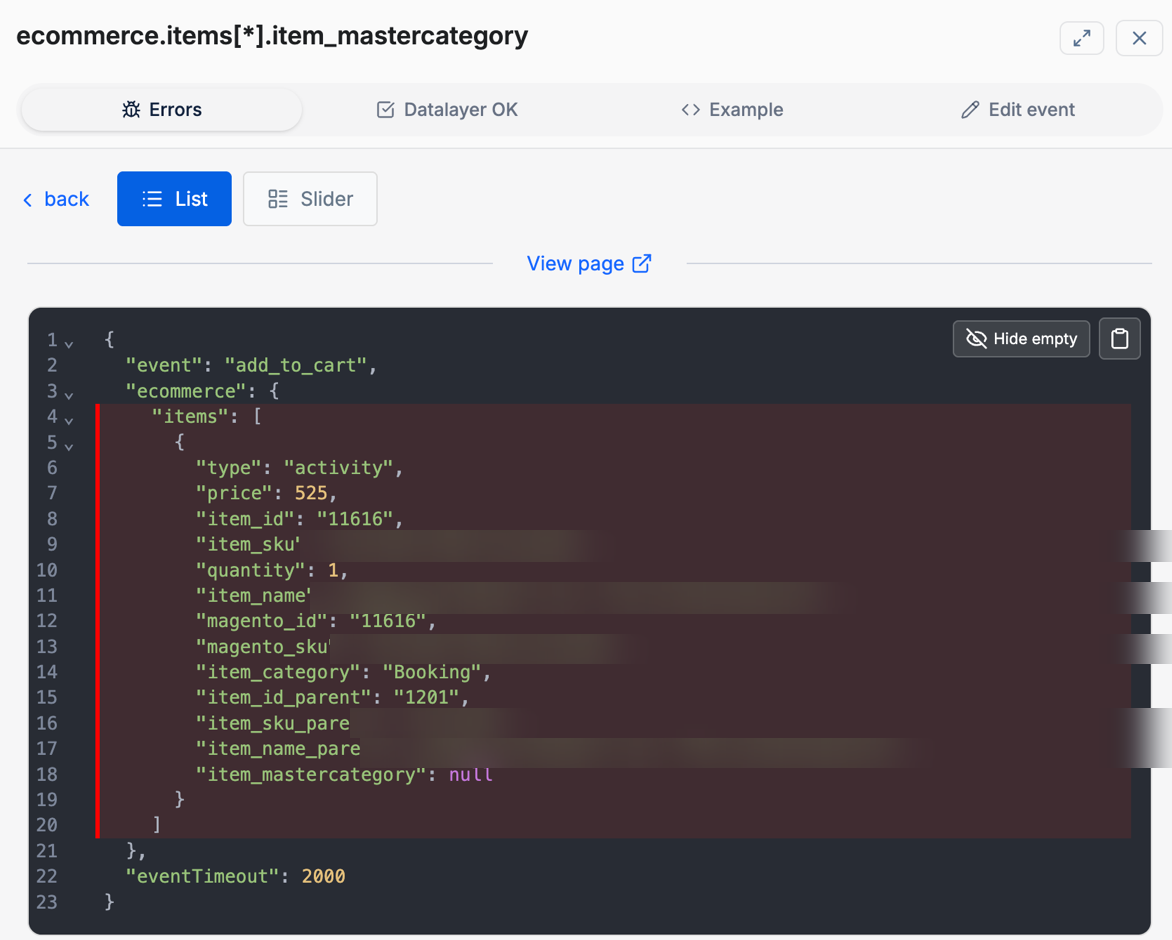
The single most frequent defect we find in fresh migrations is not missing data: it is data counted twice. Run the web container and the server container side by side (which you should: combined, they capture more than either alone), send the same purchase from both without a shared event identifier, and every vendor sees two.
This is not hypothetical. On a supplements e-commerce site we audited, Meta was receiving 2,400 purchase events for 1,002 real orders in the back office: a clean factor of two, inflating ROAS and letting the bidding algorithms optimize on fiction. GA4 will not deduplicate this for you. The fix is boring and non-negotiable: one event_id per event, shared by both containers, checked during the recette (the acceptance test run) and re-checked after every release.
Not everything sold as server-side is server-to-server
Three architectures get conflated in vendor marketing, and the differences decide both compliance and match quality:
| Consent evaluated? | True server-to-server? | Who controls the logic | |
|---|---|---|---|
| Full GTM server-side | Yes, if you forward the consent state | Mixed: some vendors still involve a browser response | You, in the server container |
| Meta Conversions API (via sGTM) | Yes, same condition | Yes: your server calls Meta directly | You |
| Passthrough gateway | No: it relays everything, including refusals | No: it is the browser payload, re-routed | Nobody: that is the problem |
The gateway trap, spelled out
We regularly meet clients convinced they are "already server-side" because a passthrough gateway sits on their domain. A gateway is a URL relay: the browser payload transits through your subdomain and continues unchanged. No consent evaluation happens in the middle, which means it forwards the hits of visitors who refused, and that is a compliance incident waiting for its audit. Match quality is also lower than a real server container, because nothing enriches the events in transit.
The test takes one minute: refuse consent on your own site, then watch the Network tab. If hits still leave for your gateway subdomain, you have your answer.
What breaks silently: the Microsoft story
Server-side setups rarely break loudly. They break in corners nobody watches. The example we now check on every audit: Microsoft. Bing Ads cannot currently be migrated server-side (the API is not open the way Google's and Meta's are), so it stays on its browser pixel, and its consent handling is all-or-nothing: where Google degrades gracefully when consent signals are missing, Microsoft simply stops recording conversions.
We have seen it twice in a row, at an insurance company and at a fashion retailer: Bing conversions at zero overnight, no error anywhere, and nobody making the link because every dashboard and every alert was pointed at Google and Meta. If Bing spend matters to you, wire its consent signals and put an alert on its conversion count. Nobody at Microsoft will call you.
Costs, and the threshold where it makes sense
Order-of-magnitude figures from current client setups, for a sense of scale. Managed hosting for a server container runs around 90 euros per month at about 2 million hits per month (entry plans at low-traffic volumes start around 20 euros or dollars depending on the host). Count roughly 1.5x your pageview-based estimate once a CDN and assets multiply requests. A full migration project, all solutions included, is measured in tens of days of calendar time, with about one day of actual work needed from your developers: a DNS record, the GTM URL change, and the cookie/reverse-proxy piece.
The threshold we use in client conversations: server-side starts paying for itself at roughly 100 to 150K euros of annual media spend (about 25 to 30K per month). Below that, the same money spent on consent-banner optimization almost always returns more data: a banner that converts refusals into accepts recovers legally what no proxy can recover technically.
How to verify a setup, concretely
This is the walkthrough we run on every audit, and you can run it yourself in ten minutes.
- Private window, DevTools open, before touching the banner. Application tab, Cookies: no _ga, no _fbp, no vendor cookie should exist yet. If _fbp is already there, a pixel fires unconditionally; we find this on a majority of first audits.
- Network tab, filter on "collect". The GA4 hits should target your subdomain, not region1.google-analytics.com. In the request URL, read the gcs parameter: G100 means consent denied, G111 means granted. Seeing G100 on a hit is normal in advanced consent mode (that is the cookieless ping); seeing a vendor cookie set alongside it is not.
- Check the response headers of a hit to your subdomain: a Set-Cookie header (FPID is the typical name for the server-set GA identifier) is the signature of a real level-3 setup. No Set-Cookie means your cookies are still JavaScript-written and still die in 7 days on Safari.
- Accept consent, run a test purchase, and count it in each vendor: once, not twice.
- Re-run all of this after every CMP update and every container publish. Every silent breakage we have diagnosed was introduced by a routine change nobody re-tested.
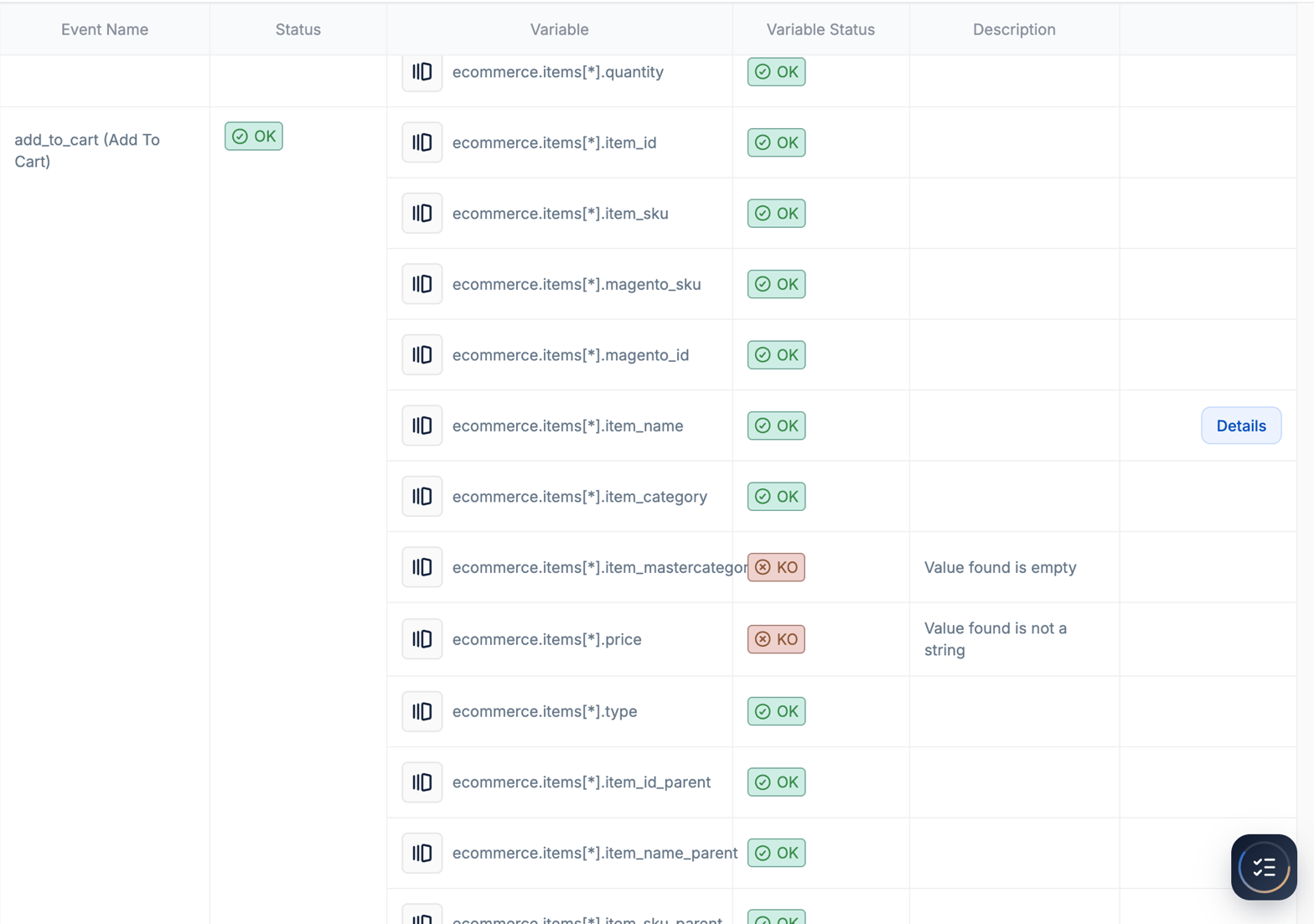
Our free tracking checker automates the passive part of this inspection on any URL; the audit module in Tag Insight runs the full variable-by-variable comparison continuously.
Frequently asked questions
Keep reading
Want to know what actually fires on your site?
Run our free tracking checker: it inspects cookies, tags and consent behaviour on any URL in about a minute.
Check my site for free